
From Sommelier to Mission Café
Sascha is the friendly face with the calm voice who greets us with a smile whenever we enter Café Karol. He is the service manager of our cozy café on Praterstraße. The former wine sommelier moved from Germany to Vienna and is now helping to build our vision of encountering every person with a reflection of the same love that God shows us.

How It All Began with an Ultimatum
Sascha was a true “hospitality kid.” He was already working in the hospitality industry at the age of 12. It was an unwritten rule that he would later pursue a career in this field, training as a hotel specialist and wine sommelier. Now he works at Café Karol, even though back then he had nothing to do with God. How did that happen?
Raised Catholic and even an altar server, the Church was not unfamiliar to Sascha. Still, faith was something symbolic or mythical to him, something culturally rooted in our circles. So he spent his youth and his twenties far from the Christian faith, until he turned 30.
“It all began with Mary, when I started praying the rosary because I had an inspiration while jogging. It was so crazy because I didn’t go to church or have any other contact with faith.”
So he began praying the rosary regularly. However, he emphasizes that this prayer was far from being contemplation at first. He simply prayed it “because it did him good.” At some point he began going to adoration. He went again and again. And then he decided to give God an ultimatum: “Okay, God, if you really exist, give me an answer. Tell me something. This is your last chance to say something. I’m not coming back.”
“And then God revealed Himself to me in the Eucharist, and it was so strong, it was physically tangible. It was painful, it was a feeling of happiness, it’s hard to describe… I think anyone who has ever experienced something like this can understand it. And from that day on, everything changed.”
God was unknown. Now he became the King, and in the end, a friend.
An Open Space for Encounter
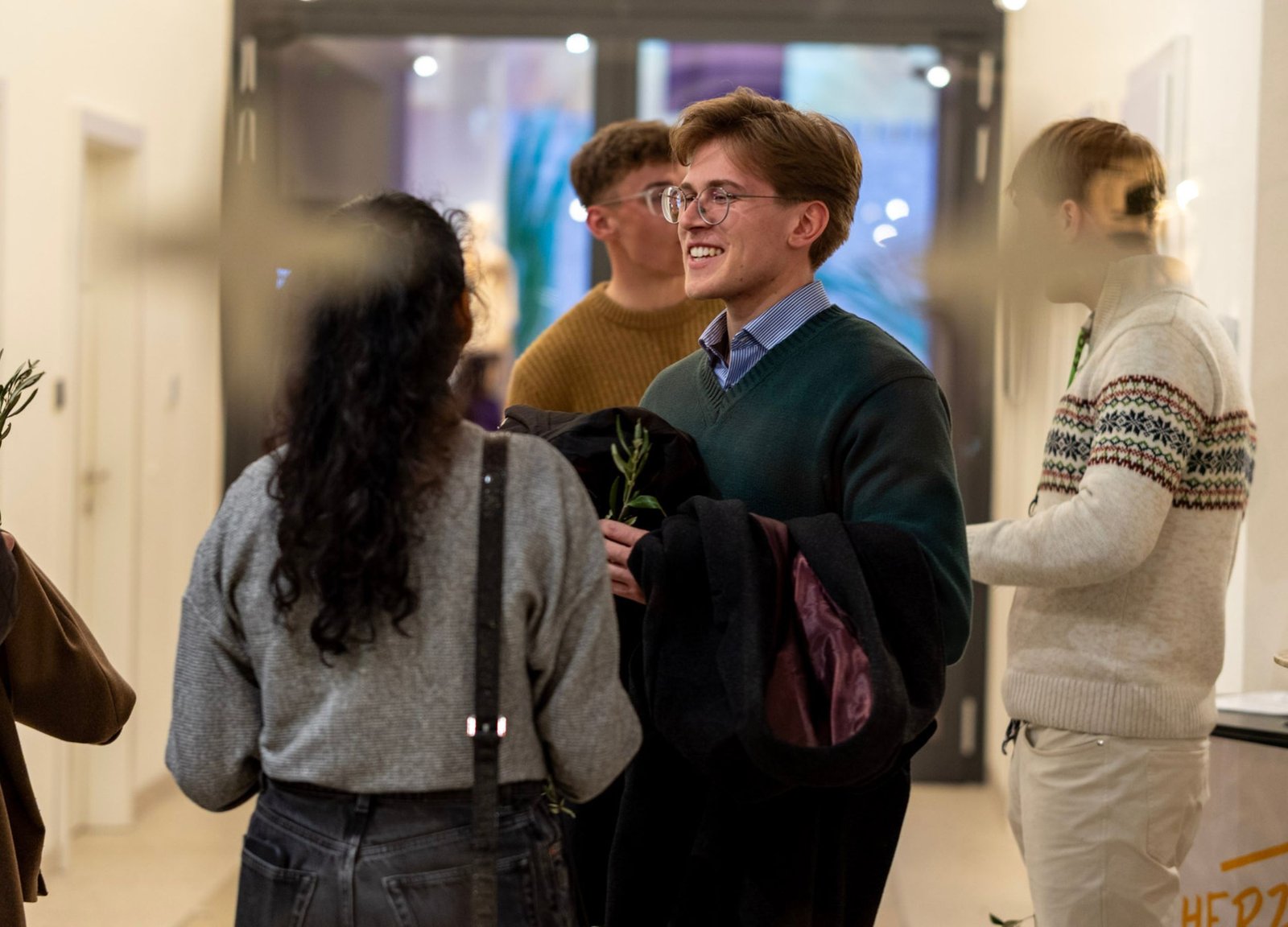
Sascha describes Café Karol as a kind of gray area. It is neither a typical church café nor a café like any other. It is an open space for encounter, a place where people from all walks of life can and should come together. Neighbors, regular guests, international hotel visitors from various faith backgrounds, staff members, and parishioners all meet here.
Openness Without Pressure
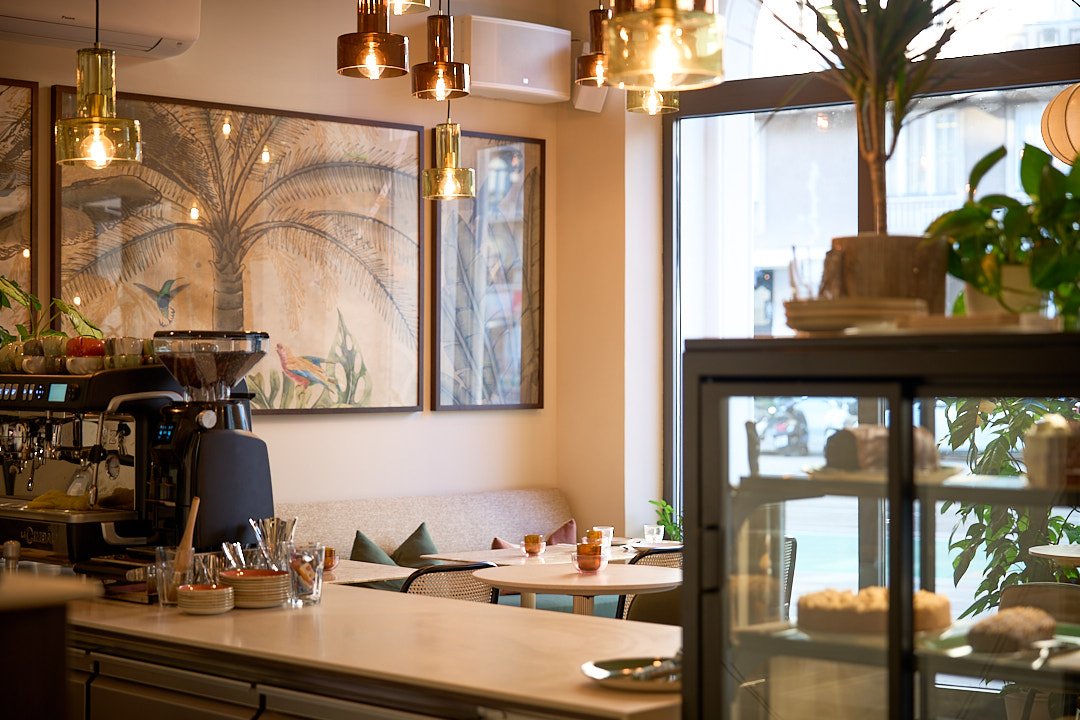
The building shared by Café Karol and the John Paul II Center is the perfect place for this common vision. From the outside, Karol looks like a normal coffeehouse, with a cake counter, cozy seating areas, and plenty of greenery. Only after a while, or when you go deeper into the building, does the beautiful, modern chapel come into view without feeling intimidating. Especially at night, when the warm light of the sanctuary illuminates the street, the house feels inviting without imposing itself. The threshold that so often stands between the church space and the street, behind heavy doors, is lowered here.
Everyone Is Welcome
Karol seeks to embody what the John Paul II Center wants to live. We want to be fishers of men. And in the words of Fr. George: We as Christians are called to fish, but sometimes we are turned off by the fish. We want nothing to do with them. We seem suprised that they smell like fish, dress like fish, think like fish, act like fish. We put up barriers and say, I will only talk to you when you have stopped being a fish. “Here every person is accepted exactly as they are, even if they think differently, speak differently, or dress differently from what we ourselves may be used to.“ That doesn’t mean we agree with everything they say or do. Unconditional acceptance of the person and true love is not unconditional condoning of action. But the point is: We cannot become fishers of men if we do not sincerely love people. What does that mean? St. Enrique di Ossó once explained it to the superiors of the community of sisters he founded in this way: If we want to help the sisters be better, then we must accept them as they are, so that they can become what the Lord has created them to be. This also applies to someone who at first glance, may not seem to fit into a church. And therefore everyone is welcome, regardless of whether they only come for a coffee or enter the chapel.”
Jesus at the Center of it All
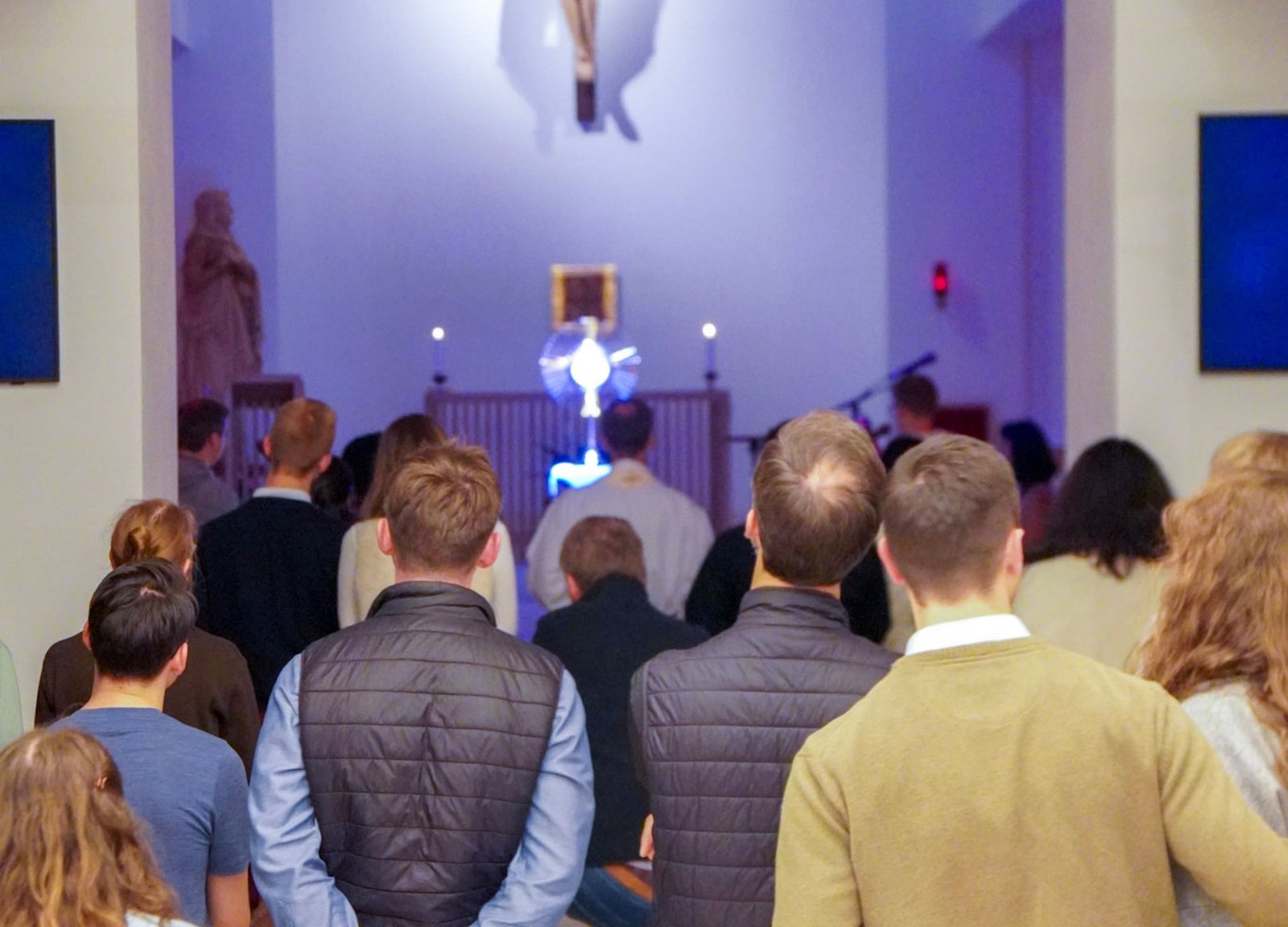
A central element of Sascha’s vision for the Center is the visibility of God. Especially in the evening, the sanctuary is brightly lit so that passersby on the street can look directly through the windows at the large monstrance with the Host. This often leads people to stop, look in fascination, and even enter spontaneously. For Sascha, the John Paul II Center seems made to host 24/7 adoration, continuous Eucharistic adoration, because the space itself fosters exactly this open presence. Beyond the hospitality side, Sascha sees the Center as a true spiritual powerhouse. He is deeply moved by the way community is lived there, especially through “praying for one another, standing up for one another, before God.” Seeing the fruits this shared prayer bears is, for him, a very special and profound experience, one he has truly encountered in practice at the John Paul II Center.
So what does Sascha recommend to anyone who wants to begin their own journey with God?
Simply start speaking and address God directly, even if, for those who doubt, it may at first feel as though they are speaking into emptiness or “into nothing.” As a second important step, he emphasizes how essential it is to allow silence. In a time shaped by constant noise from podcasts, television, or music, one should consciously seek out a quiet place, because God is found precisely in stillness and in the “gentle whisper.” In addition, he recommends choosing a personal patron saint to accompany you on your journey of faith. Since every saint has a different character and a unique perspective on God, everyone can find guidance that suits them. Finally, Sascha points to the image of the “two pillars” from a vision of Saint Don Bosco: whoever orients themselves toward the Eucharist and the Mother of God has a secure foundation, “a safe bet,” for their spiritual journey.